
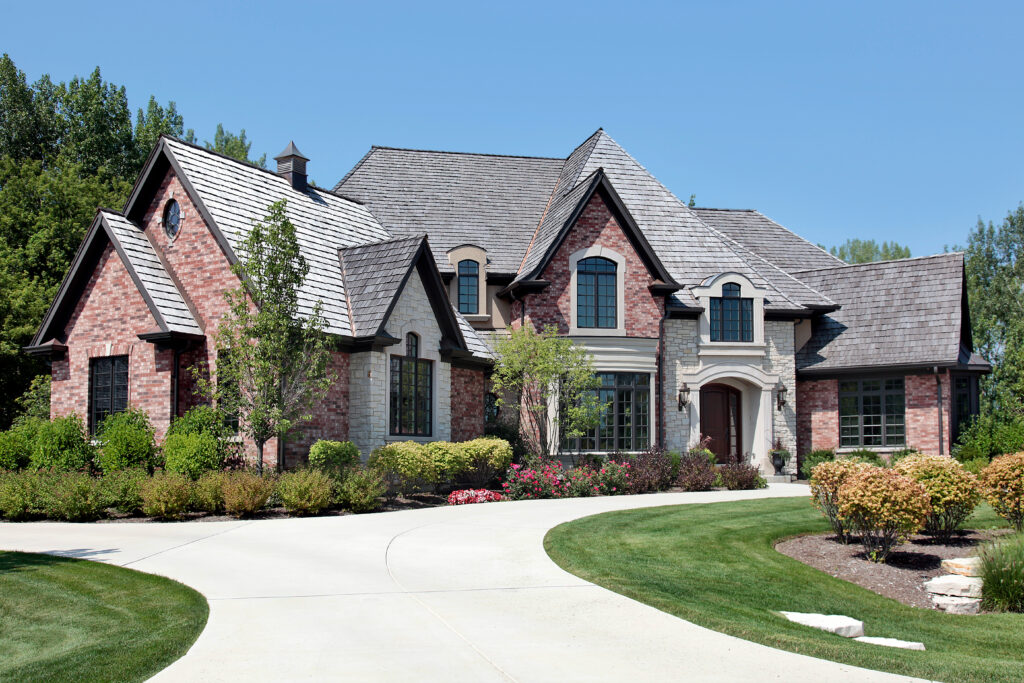
Most people feel two things at once about designing a custom home, excitement for the home they are about to create, and dread for the year of decisions standing between them and it. You brace for the process the way you brace for a long flight, something to get through before you land somewhere good. A year of decisions and delays, and a builder who gets harder to reach the moment the deposit clears. You have heard the stories from friends.
What those stories leave out is that when the process runs well, it is not the toll you pay to get the house; it is a part of what you are buying. You are not only building a home. You are living through the making of one, and that year leaves you something the photographs can’t share.
Here is the custom home design process in the order you will really experience it. The stages are broadly the same across all builders, it’s the moments inside them that are where the experience is won or lost.
Step One: The Consultation
For years, the house lives as a phrase you say to each other. “When we build.” It is a folder of saved images, and a Sunday drive that always seems to pass the properties you can’t stop thinking about.
Then one morning you sit down across a table, and instead of reciting square footage, you describe how you actually want to live. The way morning light should hit the kitchen, where your kids will do homework, and someone writes down every word. Not a salesperson collecting your phone number. The architect, the designer, and the project manager who will make it happen.
That is the moment the house moves from someday onto a calendar.
What makes this meeting feel different from every other builder you have sat down with comes down to one structural fact. Engelsma is the rare Grand Rapids custom home builder whose interior designers, project managers, and the craftsmen in its own cabinet shop all work under a single roof: seventy-five specialists, and one point of contact who coordinates them for you. The person who draws your kitchen, the person who prices it, and the person who builds it are effectively already in the room together. Nothing you say has to survive a game of telephone between three separate firms.
You leave that first meeting lighter than you walked in. The size of the project has not changed. The sense that you have to carry it alone has.
Step Two: Design and the 3D Walkthrough
The next step surprises most people.
Long before anyone breaks ground, you see your home rendered in full three dimensions. It is not a flat blueprint you have to decode in your head. You move through the actual rooms on a screen. You stand in the great room, walk down the hallway, and look out the window above the kitchen sink at the view you will wake up to for the next twenty years.
Seeing it now means catching it now. The hallway that runs a foot too narrow, the island that wants to turn ninety degrees, the morning light landing exactly where you hoped. You make those discoveries here, on the screen, where a change costs nothing more than a conversation, rather than months later in framed lumber, where the same change costs a small fortune.
A very particular fear lifts the first time you walk through your own unbuilt home: the fear that you are about to spend a great deal of money on a guess. You are not guessing anymore. You are editing, and you know it. That certainty is what lets you break ground without a knot in your stomach. See examples of these walkthroughs in Engelsma Homes' portfolio.
Step Three: Finish Selections
A few weeks in, the stage you were told to dread turns out to be the one you look forward to.
You sit at a table covered in choices. Wood samples with the grain running in different directions, stone slabs, cabinet finishes, plumbing fixtures, tiles you can hold up to the light. Beside you sits a designer who has done this hundreds of times and has already narrowed a genuinely overwhelming universe of options down to the handful that suit your custom home, your location, and the way you live.
In a poorly managed process, this is where excitement turns into exhaustion. Decision fatigue is real, and a thousand unguided choices will wear down even the most excited couple. The difference here is guidance: a curated set of options instead of an open catalog and a shrug. Choosing stops feeling like a test you are afraid of failing and starts feeling like what it should be, which is the best kind of shopping, for the most important thing you will ever own.
Step Four: Pricing and the Contract
This is where most stories about building go wrong, and where this one is built not to. The reason is sequence. You make your selections before the contract price is set, so the number you sign is built on the actual cabinetry, tile, and fixtures you chose, not on the placeholder allowances that look fine on paper and swell the moment you pick something real. One team prices the whole scope and puts it in writing, so the estimate reflects what your home will genuinely cost to build.
That is why you see the full number before you sign anything, laid out line by line, and understand what each choice costs while there is still time to trade one thing for another. There are no vague allowances. There are no unexpected costs waiting to surface after construction begins.
It is the least romantic step in the process, and is the one that protects your vision for the build itself. When the budget is honest from the very start, the excitement of the earlier steps survives contact with reality. You get to spend the build looking forward to your home, rather than bracing for the next unexpected change order.
Step Five: Construction
Then the house begins to rise, and you can follow it every day if you want to.
At Engelsma Homes, you get you get real updates, progress photos, and a schedule you can see, so you are never left wondering what happened on-site this week. One client described it plainly: over a full year of building, not a single day passed without someone on his site working. You feel that pace.
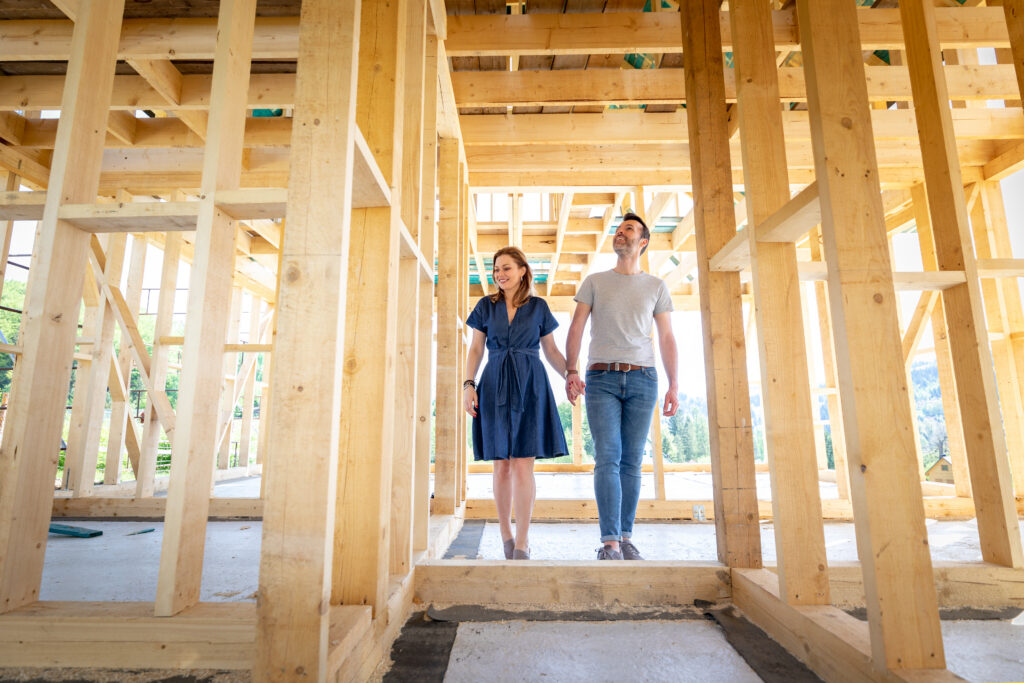
The photograph on your phone is not the moment, though. The moment comes the day you drive out and stand inside the framing for the first time. There are no walls yet, only bare studs and open sky above them. You step into the space that will be your great room, and the afternoon light comes through the gap where your window will go, and it lands exactly where the drawing said it would. You put your hand on the stud that marks the edge of the kitchen you have been imagining for a year. People tend to fall silent the first time they feel that.
Step Six: The Final Walkthrough
There is a moment near the end when you know, without question, that the home is yours. The team walks you through the finished home one room at a time and formally hands it over to you. They give you more than a set of keys, they’ll give you the knowledge behind the home: how the systems work, where everything lives, what to expect through the first winter. It is unhurried and thorough, the way you pass something you care about to someone you trust.
Behind that calm is a promise worth asking any builder about at the very start. The relationship does not end on move-in day. Our perpetual warranty and a team that still picks up the phone long afterward mean the walkthrough is not a goodbye. It is the moment you stop building your home and start living in it, with the same people standing behind their work.
This is Not the Right Process for Everyone
This is not the only good way to build a home, and we would never pretend it is. If the lowest bid and the fastest possible close are what matter most to you, there are talented builders who do exactly that, and do it well.
But if you have read this far, you are probably not building to a spec sheet. You have a home in mind that does not exist yet, and some part of you already suspects that the making of it should be as rewarding as the result.
It can be. That is the entire reason to build a home this way.
The custom home design process begins where it always has, with a conversation. Come sit down at the table at our Design Center, or call us at (616) 326-3987, and tell us what “when we build” has been sounding like in your head.
We will write every word down.