
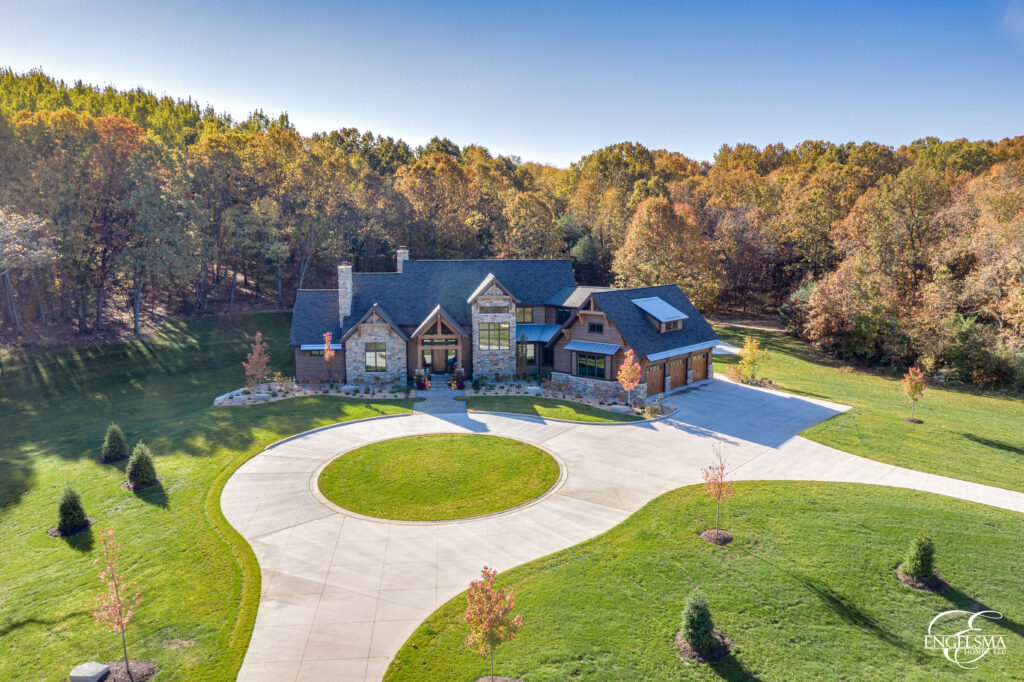
Building a custom home starts long before framing begins or materials are ordered. It starts with the land, and understanding what your builder is looking for during those early site visits helps you stay informed and confident throughout the entire process. This guide breaks down the terminology you’ll encounter at each phase, from initial evaluation through construction, so you know exactly what’s happening and why it matters.
Initial Land Evaluation
The first phase of any custom home build is understanding what the lot is actually working with. Your builder and surveyor are gathering the information that will shape nearly every decision that follows.
Site Evaluation is the process of assessing a lot’s physical conditions before design or construction begins, including topography, soil composition, drainage patterns, utility locations, and any existing structures. Site evaluation is where your custom home actually begins, and the findings directly shape foundation design, grading decisions, and how the home is positioned on the land.
Field Verification is measurements taken on the actual site to confirm or adjust what architectural drawings and surveys assume. Real-world conditions don’t always match existing documentation, so field verification captures the true state of the land before construction begins. Slopes, elevations, utility locations, and existing structures all need to be verified before construction starts. Even small discrepancies between documented conditions and reality can affect foundation placement, drainage design, and how the home sits on the lot. Field verification isn’t a sign that something is wrong — it’s standard due diligence that protects against surprises once work is underway.
Preparing the Land Before Construction Begins
Once field verification confirms what you’re working with, the focus shifts to physically preparing the lot. This is largely invisible work in the finished home, but it’s foundational to everything built above it.
Grading is the process of shaping the land’s slope and elevation to control how water moves across the property and away from the foundation. Some lots require soil to be added or removed to achieve the right elevation; others need slopes adjusted to direct water toward drainage systems rather than pooling near the structure. These decisions are informed by what field verification revealed about natural drainage patterns, soil composition, and existing topography.
Drainage Planning is the system-level design for managing water before it becomes a problem — directing runoff away from the foundation and into infrastructure suited to your lot’s specific conditions. Poor drainage leads to water intrusion, soil erosion, and foundation issues that compound over time. Drainage planning works in tandem with grading and happens before footings are poured, meaning the decisions made here affect the long-term performance of everything built above.
Precision During Framing and Exterior Work
With the land prepared, construction begins — and your builder’s attention shifts to a different kind of precision. This is where structural and weather-related details get locked in before they’re buried behind finishes.
Out of Plane is a condition where walls, floors, or foundations deviate from perfect flatness or alignment with adjacent surfaces. Even minor deviations affect how finishes, cabinetry, and trim install later in the build. Identifying out-of-plane surfaces during framing allows corrections before they compound into larger issues — catching imperfections while they’re still straightforward to fix.
Kickout Flashing is a small piece of metal installed where a roof slope meets a vertical wall. Its job is to direct water away from the wall surface and into the gutter. Without it, water runs behind the siding and causes damage that stays hidden until it becomes a serious problem. It’s a minor component with outsized importance for long-term durability, and a detail that distinguishes builders who understand what actually protects a home from those focused only on what’s visible at completion.
Build Confidently With Engelsma Homes
Engelsma owns and develops lots throughout West Michigan, including premium locations in Forest Hills, Ada, and along the lakeshore. Every property goes through thorough site evaluation before we break ground, ensuring the home we design is built for the specific conditions of the land it sits on.
If you’re ready to explore available lots or discuss how we approach site preparation, schedule a consultation with our team. The right piece of land is the foundation of everything that follows, and Engelsma is here to help you find it.